Church

Killing the Program: Further Thoughts on Worship…

Last week I posted, “Confessions of a Former Worship Leader,” which garnered quite a  bit of attention. The post deserved an immediate follow up though it seemed best to let it simmer, both in my brain and yours.

The main argument of the blog was that musical worship in church has gotten a bit out of hand. And while I don’t wish to see an end to musicianship in the church (by any means), I do think it’s healthy to deconstruct what we do, examine it and question.

The sacredness of worship is beautiful and timeless; the traditions we’ve built are what’s worth questioning.

In the days since that post, I’ve had a couple great conversations regarding church and the program—some I agree with, some I don’t. There seems to be a growing sentiment of disdain for the modern, local church. You could almost call it distrust.

I just don’t trust where the money goes…

I just don’t trust the motivations…

I just don’t trust the program…

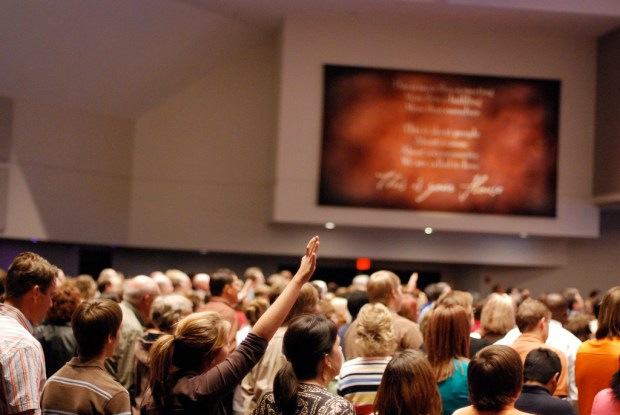
In fewer words, the growing sentiment is this: let’s kill the program. The program (church program, that is) is, arguably, built to shuffle many people in and out of a building on Sunday. The before statement removes any spiritual aspect from the motivations of the elders and pastors, I understand that. But this is the perspective of people like me who just don’t relate to a big show on Sunday. To us, church is, and should be, nothing more than a gathering of believers.

We believe that Church can happen anytime throughout the week, and the existence of a stage feels counterintuitive to Christ’s message.

To be honest, I’ve grown past my contempt. Big church isn’t something I feel we should kill. I still have struggles, yes, but I’ve come to respect big church for who they serve and all the good that they do. Just because I don’t personally relate to the show on Sunday, doesn’t mean other people can’t. In fact, many, many people do. This was a hard realization to make.

Sometimes, I feel the criticism take over. In these cases, I’m sinning.

If we’re not careful, the distrust in our church may become just another empty tradition we wrap ourselves up in. This is why every believer needs to be in fellowship. Not in a big church, not in a little church, just in church. Other believers keep us grounded. When we have someone to bounce ideas off of, instead of the padded walls in our brain, we are given feedback and advice. Sometimes, just saying something out loud relieves the tension.

Here’s some questions to ponder:

1. How do we mend the growing sentiment of distrust between believers and the church?

2. Will there always be a gap between anti-program and pro-program believers? Is this an issue we should even try to solve in this world?

3. By respecting the program, would those in church be more willing to respect the, I hesitate to say it, “organic model”?

4. Can corporate worship exist outside of physical church walls?

5. If we’re not involved in church, do we have a right to criticize it?
What do you think?

Confessions of a Former Worship Leader

Corporate worship, about two years ago I walked away from it. Praise music on Sundays, youth on Wednesdays—after years and years, I said goodbye to it all. I didn’t loose faith, nor did I sin my way into shame, I just burned out. My feelings, my doubts, the weight of it all just bubbled up.

Like so many others before me, I was hurt by the church and left because of it. Hurt, though, is part of any relationship; it’s what we sign up for. As time went on, I realized my hiatus was less about mending hurt feelings and more about uncovering hidden ones.

This blog offers some food for thought about worship. Issues that bug me, stuff I’ve come to terms with. While I don’t wish to offend anybody, I do wish to start a conversation. So, here it goes.

This Isn’t a Concert?

Worship leaders deal with a lot of weird stuff. There’s this pressure, this weight. We’re told that God is the priority, that Jesus is the reason. “It’s not a performance,” we’re told. “It’s a Godcert.”

Then, we’re given a microphone and put under lights. We’re in a room, with a stage, built like a performance center. Songwriters exist in just about every church, yet only Top 40s worship is allowed. Keep the drums low, pick familiar songs, fill your time slot.

Isn’t worship so freeing! No, no, not really.

Since Christian musicians can’t call what they do a concert, or performance, or take any credit, they look for confirmation where they can get it. In my day, I’d count raised hands, or note those having an “experience.” Every worship leader does this. They’re lying if they say they don’t. The problem with this system is that we inevitably pander our services towards gaining such responses, both consciously and subconsciously.

Things get shallow, fast.

It’s not us, we say. It’s God. Then we pat ourselves on the back for having a good show, I mean set, I mean God is good, all the time.

Warship 

This is the part of the conversation where someone reminds me that worship doesn’t have to be in musical form, in a church. I agree. In fact, I’d counter back and say that worship was never meant to be in musical form, in a church, but a life-long commitment. Singing in church, I believe, is just an act of unison between believers, an act of commodore.

Singing brings us together. It builds bridges. It reminds us of the hope we stake our claim in. It blurs out the differences and clarifies the similarities. It’s for us!

Why have we labeled it worship?

Fellowship, our meetings, is about loving and learning from each other in the name of Jesus. It’s about community, communion, and communication. It’s about learning HOW to worship.

There’s this individualistic “experience” in worship that everyone wants now. People my age flock to church in hopes of getting spiritually high so they can last another week. Ultimately, this is what pulled the plug for me.

We, us worship leaders, hypnotize our churches with chanting and self-indulgent “improvisation” until our congregations are blue in the face. We execute drum build-ups in musical bridges like clock-work—always before the last chorus—for a high user “experience” return rate. We have it down.

Then we say, “God did it,” and I punch a figurative hole in a figurative wall.

Rain Down on Me

The quality of Christian musicianship has never been better. It’s not uncommon for me to buy a CD from time to time. I’m not asking for churches to stop what they’re doing. I’m just saying we call it what it is, a Christian concert. No weird pressure, no mental breakdowns, no expectations. Let church be church and concerts be concerts. People can skip the concert if they want to and not be chastised for it.

After all, worshiping God is a life-long sacrifice, not a thirty minute music set. Washing feet, serving in love, praying for others, this worship is true.

Worship God on your own time.

What are your thoughts?

Further Reading:

Killing the Program: Further Thoughts on Worship

Please Support My Twitter Ministry

Please Support My Two Week Hawaiian Missions Trip

Adulthood: Embracing the Now & Forgetting the Why

One can’t help but get a little older. Wives are good for nothing if not for telling you how old you are. Megan reminds me of this all the time: “You’re two years older.”

“And wiser,” I respond.

Despite the rabid pace at which youth escapes my body, I expect some of the mannerisms and routines that accompanied my early years will always be with me.

The sample tables at Costco are primary. Shopping is second… at best. There’s others like me, too. Yesterday, I ran into the same sample shopper at every table. We nodded.

My attention span is weak, like coffee from the church foyer weak. At any given time, I’m usually half present and I apologize for this; I’m trying, really. This will probably be a lifelong struggle. Bare with me.

I say weird things at awkward moments. That is, the moment is fine until I make it awkward. Once, I worked at a hotel and checked in a guest. During the silence I asked if he met any ladies on his trip. He was a priest and promptly said, “no.”

You see what I mean. I’m sure you do weird things too. I know you do. The crazy little brain movements and body patterns are just part of the human experience. You probably rant in the bathroom with strange accents or something. I can only guess.

We are all just grown up kids. (No one has refuted me yet!) As adults we can choose when we want to be a child, that’s the coolest part. I mean, haven’t you seen Hook? (You’re doing it, Peter!)

normal_hookpt2205

As we get older, we pretend this stuff doesn’t exist. The weird mannerisms. The strange facial expressions. The awkward moments. After all, we’re adults now and there’s bills to pay. We have kids and jobs and degrees. There’s no time to be ourselves anymore.

Don’t Start Eating Boogers Yet

It’s okay to have responsibilities; in fact, I rather like them. There’s men and women who meet the challenge of adulthood at every turn and I respect them.

I learned responsibilities from an early age; most older people around me were too busy beings kids so I had to step it up in their absence. Sometimes people never grow up, because of them I now struggle with letting my hair down on the weekends, or being myself.

I’m convinced, though, that every now and then we need to embrace the child within. We need to be ourselves. Not revert back, but just be ourselves. We need to allow who we are to shine and forget about the future for a change.

We need to embrace God’s greatest present—the present.

I’m sure we could all use a little more of that.

Road Trip

This weekend, Megan and I decided to be irresponsible. With two days notice, and a very inspiring episode of Parks and Rec to motivate us, we’ve decided to visit the Grand Canyon on a whim.

We have little money, a car that’s traveled too much this year already, and a severe lack of camping material; needless to say, we’re excited. My good friend Randall, who you may remember from Salmon Creek Trail, will be joining us.

It’s Friday. Go do something fun this weekend. Enjoy the present! Embrace the kid within you and report back to me. You may find adulthood to be a little more interesting when you do.

What are your thoughts on God’s gift of the present? Is it dangerous to focus too much on the past or the future? Any good stories of embracing the kid within? How about Grand Canyon advice? 

Life in the Spiritual Fast Lane

Spiritual fasting. What do you think about it? Does it intrigue you? Personally, the thought of it makes me hungry, a bad sign. Fasting is definitely not my strong suit.

Recently, I read Siddhartha, by Herman Hesse. The second book of Hesse’s I’ve read, and admittedly my first on Buddhism, Siddhartha follows a fictional character (paralleling the real Siddhartha Gautama) who throughout his life searches for oneness and truth.

My upbringing has taught me to read all non-Christian, even non-evangelical, religious material with a filter. This filter acts less like a screen door and more like an actual door. Closed all the time.

As I’ve aged in spirit and body, I’ve come to realize that much can be learned from other religions. We all yearn for God. If a life-long monk wanted to take me out for coffee, or better yet, donuts, then you can bet I would take his offer. I’d probably even have to pay and I would still take his offer. I love donuts. I love talking about God with donuts.

This theoretical monk has spent his life learning to fast, learning to think, learning to be less. I would love to hear his insight, wouldn’t you? Just because religious roads differ, this doesn’t mean travelers can’t bump into each other every now and then. And get donuts.

Consumerism, Buddhism, & Ism-ism

Fasting was never pushed on me. I’m not blaming anyone else for my ignorance towards it, but let’s just say that the culture I grew up in simply didn’t value it. “It’s more of an Eastern thing,” I would hear or, “Just don’t tell any one about it.”

Regardless of how I got here, I’m here now. I believe that Americans have much to gain from learning to fast.

Our eyes have been purchased by the cinema of must-have.

Our hearts foster inward desires over the outward love of Christ.

Our bodies sleep best in a commonplace of complacency.

What if consumerism was just another powerless foe? What if we could break the paradigm? I wonder about a world where Western Christians could chose others before themselves, every day, with every dollar and every minute.

In the book, the young adult Siddhartha wishes to go into business with a merchant. The merchant asks Siddhartha what he can do. Siddhartha replies, “I can think. I can wait. I can fast.”

“… fasting, what good does it do?”

This is my favorite part:

It is very good, sir. If a person has nothing to eat, then fasting is the wisest thing he can do. If, for instance, Siddhartha had not learned how to fast, he would have to accept any service today, whether with you or with someone else, for hunger would force him to do so. But now Siddhartha can simply wait, he knows no impatience, he knows no plight. He can stave off hunger for a long time and he can laugh at it. That, sir, is what fasting is good for.

So what do you think, is it time Westerners start fasting? Can we still have donuts? Since I’m new to this whole thing, I hope to learn one or two things in the comments.

The Folly of Academic Faith

A couple nights ago, one of my best friends sent me a text:

I was reading 1st Corinthians the other night and came across one of my favorite verses… it reminds me a lot of you and what I think is a major message you are tying to get across to other Christians.

He had my attention. Finding myself in scripture? I’ve given up on that. I find God; I find ancient people with worn stories. I find context and complexity. I don’t find myself.

I used to, but not anymore.

A side-effect of embracing the academic faith? No doubt. My spiritual journey of debates and alternate perspectives is what I know now.

Why would I be in scripture? I don’t need that any more.

The next text came through and my eyes filled with tears.

If I speak with human eloquence and angelic ecstasy but don’t love, I’m nothing but a croaking, rusty gate.

If I speak God’s Word with power, revealing all his mysteries and making everything plain as day, and if I have faith that says to a mountain, “jump,” and it jumps, but I don’t love, I’m nothing.

If I give everything I own to the poor and even go to the stake to be burned as a martyr, but I don’t love, I’ve gotten nowhere. So no matter what I say, what I believe, and what I do, I’m bankrupt without love.

I hesitated sharing this. Have I accomplished this? No way. Has anyone? Probably not.

We don’t find ourselves in scripture, but scripture finds us. It speaks to us. It grabs us and leads us. Scripture reveals the bits and pieces of us that God is shaping.

My friend Scott thought of me when he read this passage of Paul. I was honored, yet felt more like an impostor. I’m no man of love; more often than not, I fall into the “croaking, rusty gate” category.

My attitudes as of late… I think I’ve lost my way.

The Folly of Academic Faith

In these moments, I’m reminded of the folly of academic faith. We get so wrapped up in ideas. We get wrapped up in our heads, in ourselves. Beautiful simplicity—all too often, we forget it.

This last year I’ve been obsessed with meanings: Heaven, Hell, gay marriage, politics, gender roles, you get the idea.

It’s been rewarding—I would say I prefer it—though I must be cautious.

The academic faith. It’s a door to a man-made mansion with rooms added daily. We’ll never fully explore it, nor will we ever find our way back. Unless, of course, we mark our steps with love.

A warning to all of you like me. Though we yearn for debates and arguments, and we feel as if we must always dive to the bottom of every issue and search endlessly for every solution, we must not forget love.

Thank you Scott for sending me those kind words, and the wonderful reminder.

Signed,


A Modern Day Pharisee. 

Is the Church a Boys Club?

This weekend we visited some friends in the Bay Area of California. Overlooking the Palace of Fine Arts, we sat in the park and talked faith, church, Star Wars… typical Christian stuff. Most important here, we discussed the roles of women in the church.

My wife, as well as my friend’s girlfriend, had some great wisdom to give. Their perspectives were shared with both frustration and grace. Women are battling issues in the church that men can’t even begin to understand.

(Hey boys!) Have you ever thought about the complexities of being a girl in the church? Do me a favor, next time you go, give every woman you see a high five.

They deserve it.

Since I am a man, I feel that I can solve this issue with a single blog post.

Girlie Stuff

My childhood church was definitely a boy’s club. Male senior pastors, male deacons, male elders. Women were allowed to be sunday school teachers, choir directors, or secretaries, but nothing more.

Paul’s words in 1 Timothy defined my views and 1 Corinthians confirmed them. I say this as if I knew scripture, but to be honest it was bleek. I listened and never questioned the general traditions of my church. Here’s what I knew (and assumed):

Women were not to teach men. Their life goals would consist of learning submission and quietness. Overcoming any resentment held towards men and any hostility held towards God would be their life’s work.

Eventually, I read the bible for myself. I read about Esther, Deborah, Mary, and Ruth. I read Luke. I read the words of Paul. I read context. I listened to wisdom and heard alternate, biblical views. I listened to my wife. I listened to my heart.

All this to say, I’m still sorting stuff out.

Your Mom was Stifled  

I recently read The Blue Parakeet by Scot McNight. In it he talks about the various ways people read the bible. He mentions that everyone picks and chooses scripture; he calls it discernment. The problem, says McNight, is when our discernments become canon and our canon becomes the lens through which we view scripture.

The modern church has done this—it has, we have, shaped our traditions into canon. The stifling of women, I believe, is a prime example Evangelicals need to repent for.

(For more on Scot McNight’s great book, check it out HERE).

I’m not an expert on the subject of women’s roles, but I do hope to continue to learn. So far, this is what I’ve got:

  • The traditional church may be a boy’s club, but the Kingdom of God is not. We all have a purpose and a reason to be here. Seek what’s inside you and let it out.  
  • We are all one in Christ—the curtain was torn, remember? There is no need for division anymore. Men need to teach women, and women need to teach men. 
  • Every faith generation experiences a change of tradition in one form or another (Thinking back to Paul and circumcision, or twenty years ago to the contemporary worship movement). Expect turmoil and kickback. Offer grace, always.

large_6335630844

What’s YOUR response? I encourage all with a perspective to participate. Please know, everyone’s view on the matter is welcome. Is the church a boy’s club? Have women been stifled, or am I making something out of nothing? 

Photo Credit: [http://www.flickr.com/photos/74576085@N00/6335630844/]