Young Professional

Interview: Gar Mickelson, Kaleidoscope Community Services

I walk into 2nd Street Commons, a nondescript building in downtown Coeur d’Alene (CDA), Idaho, sandwiched between a dive bar and a closed gun shop. Once inside the first thing I realize is that I have no idea how to categorize the premises, though I try: a coffee shop without a coffee bar, a living room without a TV, a pub without the liquored smell of vomit, a church without a program. There is no schema that fits, and I love it.

People are simply scattered. They look weary, but comfortable, at ease, respite. Some folks relax on the couch while others bustle up and down hallways, in and out of the kitchen.

It is here where I meet Gar Mickelson. He wears a bright smile, gives a big hug, and introduces me to everyone. “This is my friend Kevin,” he says. And everyone I meet makes me feel like family. They, too, give hugs and handshakes.

Gar gives a tour of the facility. As we walk along I continue to meet people, a mix of volunteers and visitors. Some are cooking, cleaning, painting, hauling. The volunteers are passionate and dedicated. Because I am cynical this is all odd for me. I’m waiting for the hook, the agenda, the money making scheme, something to take me out of this fairy tale of genuine coexistence.

We walk into a new room, “Excuse the camping gear,” Gar says. “We’re holding that for someone who was forced to leave his camp site.”

“For free?” I ask. “You’re holding it for free?”

“That’s what we’re all about here, Kevin. ‘Come and be for free.'”

I really want to give Gar another hug, but that would be too weird. So instead, we head into his office, and I ask him a few questions about how Kaleidoscope Community Services started, when it started, and what the heck this place even is.

What is Kaleidoscope Community Services? What is 2nd Street Commons, and how long has the CDA location been established?

Kaleidoscope Community Services is a private, faith-based non-profit corporation based in Coeur d’Alene, Idaho. KCS exists to bridge the gap between community needs and community resources, and we do this in a variety of ways.

KCS opened the 2nd Street Commons at the end of January, 2014. Since that time we’ve had over 100 volunteers from 10 different churches, served almost 500 gallons of coffee, served almost 1000 meals, and have gone through approximately 6 miles of toilet paper…  (more…)
Rapid Recap: 2014 Digital Rochester GREAT Awards

Tonight, some Rochester tech entrepreneurs are feeling really great.

The 2014 GREAT Awards just let out, and what an honor it was to attend, to be surrounded and inspired by successful entrepreneurs, industry leaders, and rising stars. Digital Rochester, a non profit that brings “technology professionals together within the community,” hosts this swanky event every year. Here’s a succinct vision from the GREAT website:

To recognize and celebrate the Greater Rochester community’s entrepreneurial spirit in technological achievement for advancing commerce and resource conservation.

IMG_8079

The official program began with one of the more entertaining (if not best) opening videos I’ve ever seen for a stuffy, prima facie, awards ceremony, “The Fresh Prince to the Future of Technology.”

After some comical chatter, delicious dinner, and tasty tweets (eating and tweeting), the awards ceremony kicked off. There were eight award categories and twenty-four finalists in all.

Here’s a quick list of those who won: 

(more…)

Flex your kindness muscle, jerk

One of my favorite short fiction authors, George Saunders (that is, short story, not short in stature), regrets his many failures of kindness.

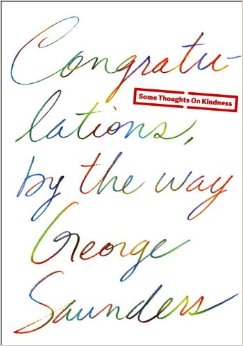
51xfEKhLwAL._SY344_BO1,204,203,200_Saunders released a new book this year entitled, “Congratulations, by the way,” and I would highly recommend it for your bookshelf. Honestly, it isn’t as much a book as it is a transcript of a commencement speech he gave. But it is fun. Also, the cover is pretty and the kindness theme is a blunt and necessary reminder. All this, of course, is well worth your time.

I found Saunder’s book at (uhem) *Urban Outfitters* in the clearance bin while on vacation. Clearance bin!? How kind.

Anyway, I’d like to be more kind.

I’ve never thought about kindness being a skill. Can it be a skill? If so, then the consequences are scary. It means our kindness can improve. I always assumed, embarrassingly, that kindness was limited by our predispositions, how our parents and community nurtured us. I assumed that “kind people” were naturally built to be nice, and the jerks (that’s me) were off the hook for round-the-clock niceness.

But framing kindness in this new light asks us to reconsider our intentionality (as well as coming to terms with the necessity of proper planetary social interdependence). Are we doing enough?

Saunders does three things in this book that I very much respect: 1) he admits he wasn’t always kind 2) he explores why we aren’t all necessarily inclined to be kind and 3) he assumes that everyone could be kind if they just focused on better (more selfless) things.

Here’s a couple quotes from the (incredibly) fast read:

“What I regret most in my life are failures of kindness. Those moments when another human being was there, in front of me, suffering and I responded… sensibly. Reservedly. Mildly.”

“Since we have observed that kindness is variable, we might also sensibly conclude that it is improvable; that is, there must be approaches and practices that can actually increase our ambient level of kindness.” (more…)

City Whisk, the app that localizes discovery

The following story appears in the current issue of 585 Magazine (July/August ’14).

Jonathan Marcowicz is the first real explorer I’ve ever met.

We sit in a café, sip coffee, and reminisce of travel. He speaks of his past like he’s still there: a heuriger inVenice, a Chopin concert in France, serendipitous nights of intrigue in Versailles. His voice has heart; his eyes tell me all I need to know. And, really, I do know.

I tell him about an Ireland trip that changed my life. About Dingle, where the locals pointed me down a windy dirt road, past roaming sheep and old ruins, a path that led me to a drop-dead gorgeous cliff edging the endless Atlantic Ocean.

“That’s it!” he says. “Exactly.”

To Marcowicz, locals are the secret ingredients for intrepid adventure—a belief he cemented after a New Orleans New Year’s road trip.The more natives he spoke with, the more unique and engaging his expe- rience became. That’s how CityWhisk—a mobile app he cofounded with Marissa McDowell and Stacey Lampell—was born. The app offers travel itineraries from a local perspective and recently won first place in the Existing Civic App category at the 2014 AT&T Rochester Civic App Challenge.

Read more at 585Magazine.com

5 Fantasy Football Life Lessons

I’m just going to come right out and say it: I play fantasy football.

Watch as my machismo drips away.

Despite its rapidly growing popularity (an estimated 33,559,990 players in 2013), people like myself continue to struggle with admitting our rabid and passionate participation. Fantasy footballers are like the new nerds. Remember when comic book nerds were uncool? That is, before Hollywood employed attractive people and dumbed down comic book story-lines?

Fantasy Football is nerdy but not yet cool. Proclaiming, “I was screwed by Dez Bryant,” outside of your respective fantasy milieu, will turn a few heads, juke a few coworkers, and roll a few eyes. It is nearly impossible to get taken seriously while talking fantasy football.

But I understand the stigmas: it is a waste of time, a waste of effort, ambition, mental energy, money, relationships, opportunity cost, all that stuff. On paper, droves of grown men and women pretending to be NFL coaches between August and December certainly reads like a bad idea. We could all probably be accomplishing something more meaningful with our lives. Yada, yada…

Listen, I love fantasy football. I’m certain if aliens invaded during my fantasy draft, for instance, I probably wouldn’t notice. I’m that invested. The entertainment experience is better than most of today’s movies and TV shows, it keeps me engaged to distant friends and relatives, and participation is free (minus time spent and optional buy-ins).

But my favorite aspect of playing the game is the life lessons I can pull from. I’m here to argue that fantasy football isn’t a waste of time, but rather, that there is value far beyond its temporal and waning pride. Fantasy football rewards its players in ways that can prepare them for many of life’s most important ups and downs. Check it out: (more…)

Modern Mantras in Aged Fiction: Crichton’s Formula for Success

Hidden away in a forty year old (mainstream) fiction novel—a potboiler, a seemingly shallow tale, prime facie—lies the secret formula for life’s success. I almost couldn’t believe it when I read it. It was so simple, so perfect. See, I’ve perused business books and self-help guides, written by CEOs, millionaires and pastors; all these people with too much time on their hands, penning “how to succeed in life.” And I’ve read them, too, because that’s what leaders do. We read books and make mantras and talk about them on our blogs. But the lessons learned in business books often dissipate faster than tweets, and we’re again left with just ourselves, curious and conspiring.

But these two sentences said everything—articulated in a cold, simple language, a language that only Michael Crichton, the master of logical and academic science fiction, could accomplish.

You went out and you hunted, armed with your maps and your instruments, but in the end your preparations did not matter, or even your intuition. You needed your luck, and whatever benefits accrued to the diligent, through sheer, grinding hard work.

Take a second, and read it again. For me? And take it slow, because these are two damn-good, well-constructed sentences. Drink them like you would an overpriced glass of wine, and when you’re done, close your eyes to impress your friends. (more…)