Author: Kevin Carver

The Waiting Game #worstgameever

medium_3214687264

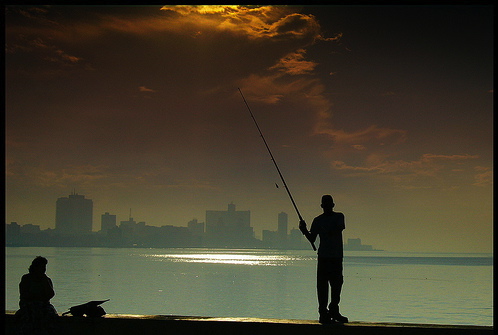
Get outta here. Just happen already. Let’s DO this.

Do you ever struggle with patience? I do. For many, patience is a virtue. For me, it just virtually sucks. I guess I’ve just never been very good at it.

A focus of mine, as a blogger, is to turn negative issues into positive.

I hope to leave my readers inspired and give them something tangible for their lives.

Spoiler alert: there is no lesson here, I’m just complaining. Leave while you can.

The Waiting Room of Life

Last September, I sent transfer applications to five universities all over the country. The schools span from Hawaii to New York. I thought, why not? With my wife, it’s our chance to roam.

The applications were finished. In the words I wrote, I staked my future. As an artist it was my heaviest project yet. It was the best epic I could muster.

In the end, these forms held my linguistic DNA. I put everything into them—everything but the impatient part, I guess. That was left with me to suffer, to yearn.

Narcissus & Goldmund 

I’ve been reading Hermann Hesse lately, specifically the novel Narcissus and Goldmund. Last night, I came upon a passage I quite liked—a discussion between two artists.

Be patient! I’m well aware of what it is like to have completed a piece of work that was of great personal significance. I know that empty feeling. It will pass, believe me.

This soothed my soul. I’m not exactly sure why, I submitted college applications over six months ago. My problem is patience, not art. But still, as an artist, I never confronted the emptiness I was left with after submitting these papers.

Yet another reason to hate the waiting game.

I’d appreciate any good stories or tales of impatience. Can you relate? Help me out here!

 [photo cred: http://www.flickr.com/photos/8398214@N05/3214687264/]

5 Reasons to Stay a Christian

I fell upon a christian radio station today.

I’ll usually stay away from these shows altogether. If I want to hear talk, I’ll go AM; FM is for music. Leave me alone.

Feeling a bit curious, I let the station keep. What’s a Monday without a little risk? Historically, I’m the type to keep to myself; whatever meat mainstream christians collectively chew and spit at, I try to leave alone and let them be.

Today though, I thought I’d feel the pulse for a bit.

Gay marriage. Of course. As if it’s the only thing to talk about. As if we don’t believe in anything else. As if Christians couldn’t differ on the issue. As if. (I’m doing my best Alicia Silverstone here).

Are we wrong, are they right? I’m not sure. All I know is that this stupid fight we’ve picked is getting the best of us.

Instead of serving the world, we’re trying to rule it. We’ve become obsessed with winning arguments and asserting political agendas; personally, I’m convinced the Kingdom of God is more than just a lobbying group in Washington. It has to be.

It has to be in the streets. It has to be in our homes. It has to be living and breathing love.

Otherwise, I can live without it.

5 Reasons to Stay A Christian
(For frustrated Christians like me)

1. Jesus, Moses, God, Paul, all instruct us to love our neighbors. No agenda. Staying in community keeps us focused on this goal.

2. There are worthy causes to fight for. How do we know which is which? In peaceful protest, Jesus died for his cause. If it’s not worth your life, is it worth fighting for? Will it save another’s if you do?

3. Agreement isn’t the point; what we need is your voice. Mainstream radio, TV, and mega-churches expect us to vote, argue and tolerate what and how they do. The Family is beautiful in it’s diversity, not sameness.

4. Leaving doesn’t make the statement you think it does. Weakness is not meekness. Doors will shut, ears will close, communication will halt. Change takes time; speak as one who loves and listens.

5. Your tithe can change the world. I used to think tithing was a cop out, but money is a faithful way to serve when you can’t otherwise. These people could use your money (and time and energy as well): Potter’s House, Restore International, World Vision, The Mentoring Project, just to name a few.

I’d love to hear some feedback on this. Can arguments (like gay marriage) distract the purpose and hinder our reach? Or are they worth fighting for?

The Intern Whoop: Taking a Local Day Pt. 2

Last year, I discovered newness inside my town and wrote a blog detailing this adventure: Local businesses and new people; I got outside—it was great. Check out, “Taking a Local Day” HERE.

Part Duex

On the first of the year, my wife and I moved from snowy Coeur d’ Alene, Idaho to sunny San Luis Obispo, California. I grew up here in SLO county, well south county, I guess.

Despite my history here, everything seemed new; the mountains had never looked greener and skies had never been bluer. The local troves held new names and faces, while their sidewalks ferried fresh bodies to and fro.

We were in a land of newness and I was bound to explore it.

Then we got jobs. Well, I got an internship and she got a job.

Makin’ Copies

My internship so far has been ideal. There isn’t much grunt work, and I’m treated as an employee with as much to say as anyone else. Though yesterday, I made copies for five hours.

Five hours. I can still smell it. The copies.

In the middle of my copying madness, I was given a quick job to distribute a notice to all the local businesses in our strip regarding a meeting of some sort.

I welcomed the break.

Makin’ Discoveries

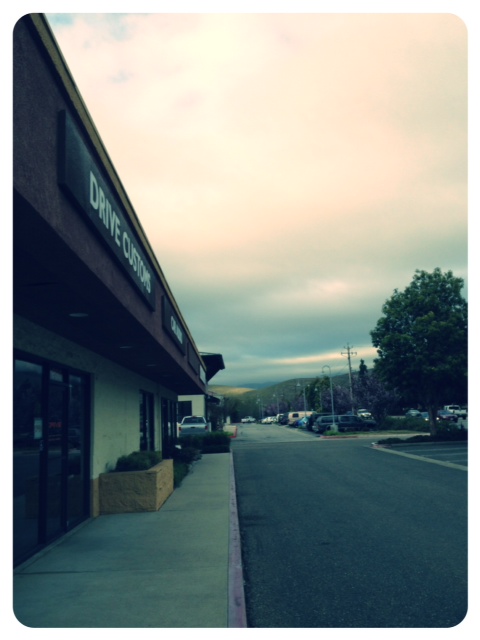
strip mall

outside

There were twelve of these notices to hand out. I peeked outside, “there’s twelve shops here?”

For over two months I’ve worked here. Besides the coffee shop, I had no idea who my neighbors were.

“There’s twelve shops?” I repeated.

So once again, I ventured out; I took a local day. Shaking hands, I discovered business owners, employees and their products.

One shop offered full car-audio installation, with a contract for city police vehicles (two were inside). Another shop sold used baby clothes, and right next to it, golf gear. Further down, I met some kids working in a skateboarding warehouse who specialized in online sales; further down, there was a Muay Thai kick boxing ring.

Like us, they were all just trying to make their mark and tell their story. Before yesterday, they didn’t exist. At least not to me.

Reminded

It’s terrible, our bubbles. We hide inside and shut out the world—sometimes on purpose, most times unknowingly. Like a horse race, we focus on the goal and miss the uniqueness that surrounds it, even if the goal is just a parking spot.

Culture is a beautiful thing. Sometimes, embracing it is as simple as walking outside.

Any good stories of meeting your neighbors? What else can we do to break our daily routines? Are all routines bad? I’d love some feedback.

Internet Fasting: My Googless Week

Google is a lot like toilet paper: everyone uses it but no one admits it. Recently, I took a week off the internet empire. Here were the rules:

 One week, no Google. Also, no Bing, Yahoo or other search engines. I did leave gmail accounts open for work and personal purposes. Maybe next time… Also worth noting, this was not a spiritual fast. One could claim, however, that I was searching… for myself… (GET IT?)

Dependency 
Without Google image search, this was the best I could do.

googless.

I’m a big fan of the internet. Besides blogging, I really enjoy social media, online shopping, and of course, the ability to watch TV whenever and wherever I want. These benefits may seem juvenile, but in all sincerity they’ve reshaped millions of lives.

The average user spends most of their time on mediums that weren’t available just ten years ago. And knowledge, well, that has come a long way. Remember not knowing the answer to a question? Awkward.

Like a sovereign empire, Google rules the world wide web with an iron fist. The simple “search” has changed more than we ever imagined it could.

I am not here to attack the internet but—rather simply—contribute to the conversation of our internet dependency.

Here’s What I Noticed

It turns out, I’m not an expert on every topic ever. Once I removed my ability to acquire instant knowledge of everything through Google search, I was starkly reminded of the work required for real expertise.

I’m capable of finding the answer on my own. Earlier this week I wrote a blog about the book of Esther. Without Google, I dedicated ten minutes to rereading and searching my own sources for context questions. I am capable!

still googless.

still googless.

I’m not a photographer. Every good blog needs a good picture. Without “Google image search” or any other picture service, I was reminded of real photography talent (unfortunately, I don’t have it). Also, I need to be better about photo cred.

Human dependency isn’t all that bad. This last week a customer asked about baritone ukuleles. Staring at a blank Google search, I almost caved in and faked some knowledge. Instead, I took a deep breathe and declared, “Ya know, I just… have no idea whatsoever.” Believe it or not, she actually understood. What I did do was direct her to a co-worker with expertise on the subject. Though not available at the time, she happily came back later.

It’ll be okay. With or without Google, it’s not the end of the world. I don’t want to rid myself entirely, but instead, set boundaries.

Fin

I hope something jumped out at you regarding my bullet points. Expecting a challenging week full of great stories to tell, I was instead left with a simpler message of patience and humility.

Would you be wiling to try it? Take a week off and let me know how it goes!

I’d also be interested hearing other takes on “internet dependency.” Have you had any experiences or viewpoints you’d care to share?

Pawnee or Bishops? (Go Take A Hike)

Every Saturday morning I wake up to a familiar and tempestuous thought. I roll over in bed, listen to the wind labor through the morning air and think: “ya know, I could just stay in bed… all day.”

As for Megan and me, we don’t have kids.

Neither of us work Saturdays.

It’s been a chilly California 57 degrees as of late.

Our TV is right in front of the bed; yes, of course we have Netflix.

This is the problem. See, we’re still adjusting to California winter. Our minds are telling us it’s much colder outside than it really is. In Idaho, it’s not uncommon to take a “bed day” here and there throughout winter.

It’s a terrible excuse, I know.

I didn’t even look outside before burning through three episodes of NBC comedy, Parks & Recreation. (Great show by the way; every episode literally gets better.)

But then I looked outside.

Sure it was a little windy, but also warm. Sunny in-fact! California sunny! We both had an “oh yeah” moment and thought: instead of watching Parks & Recreation, why don’t we actually go to a park and recreate… (it sounded better in my head).

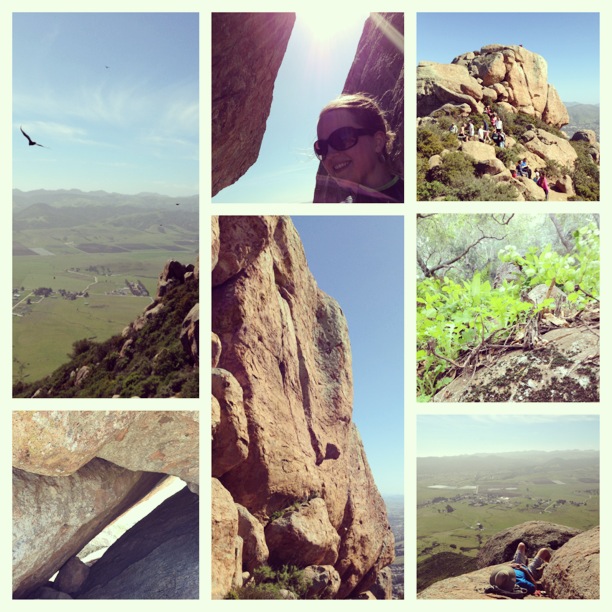
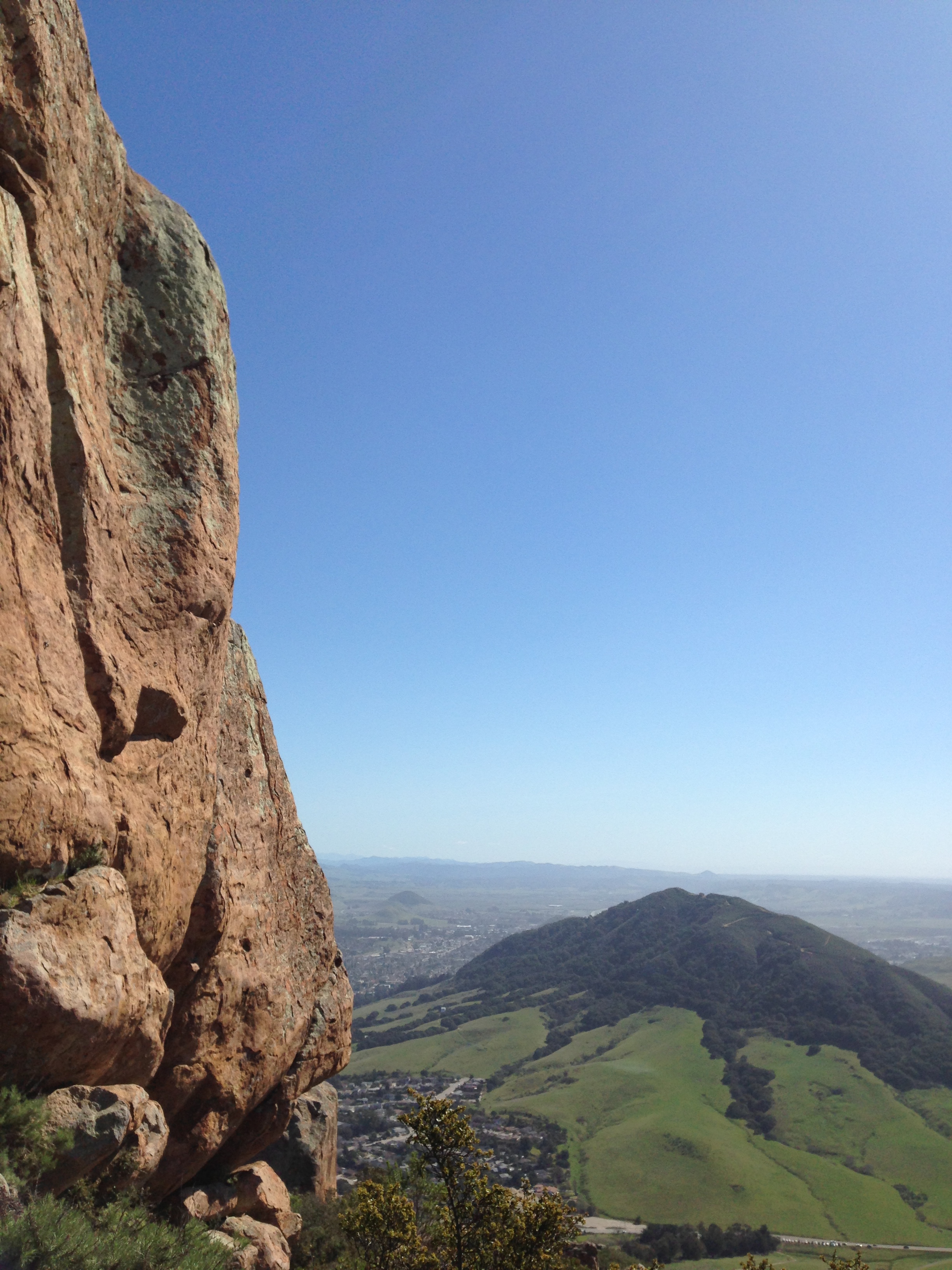
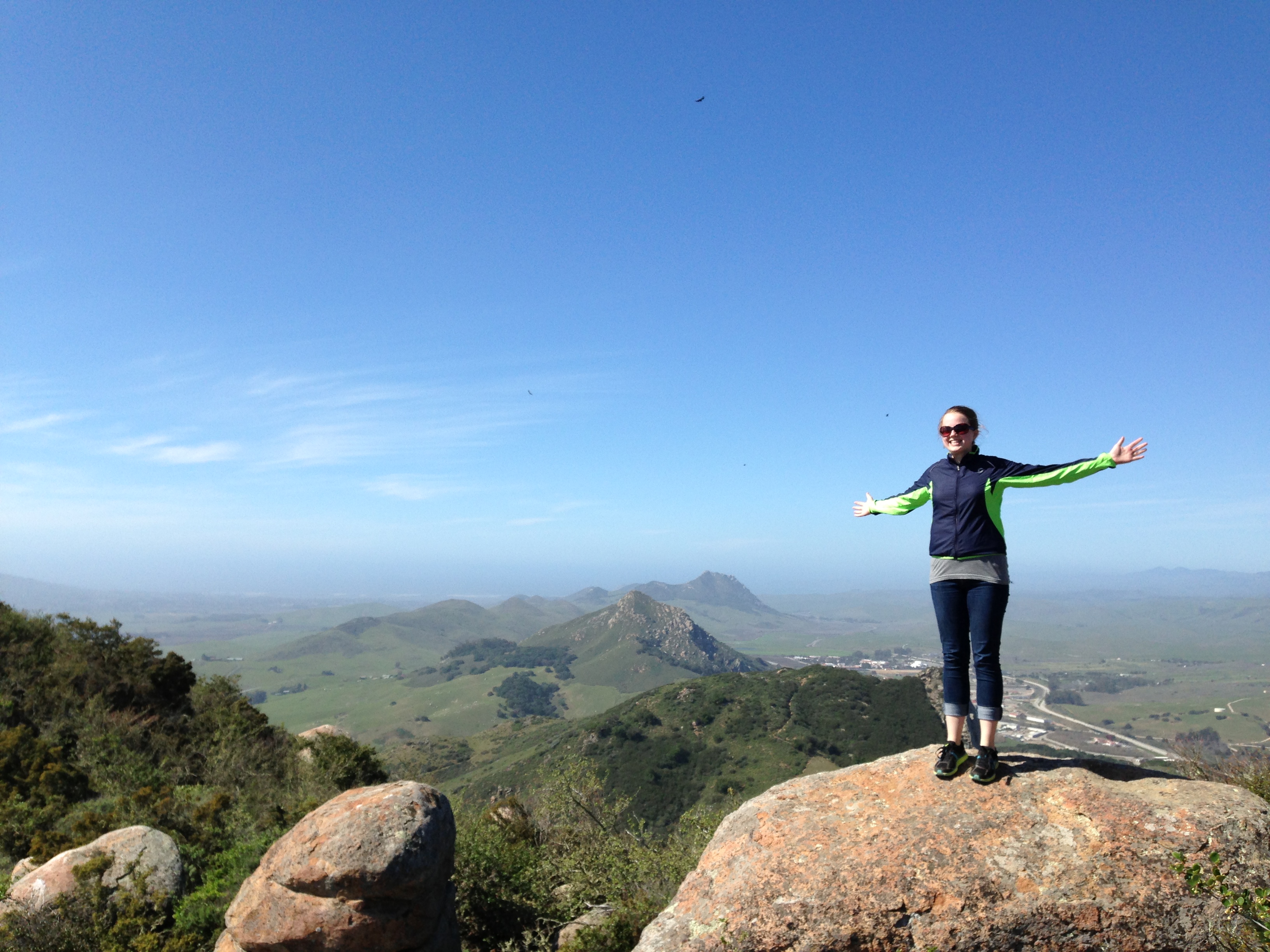
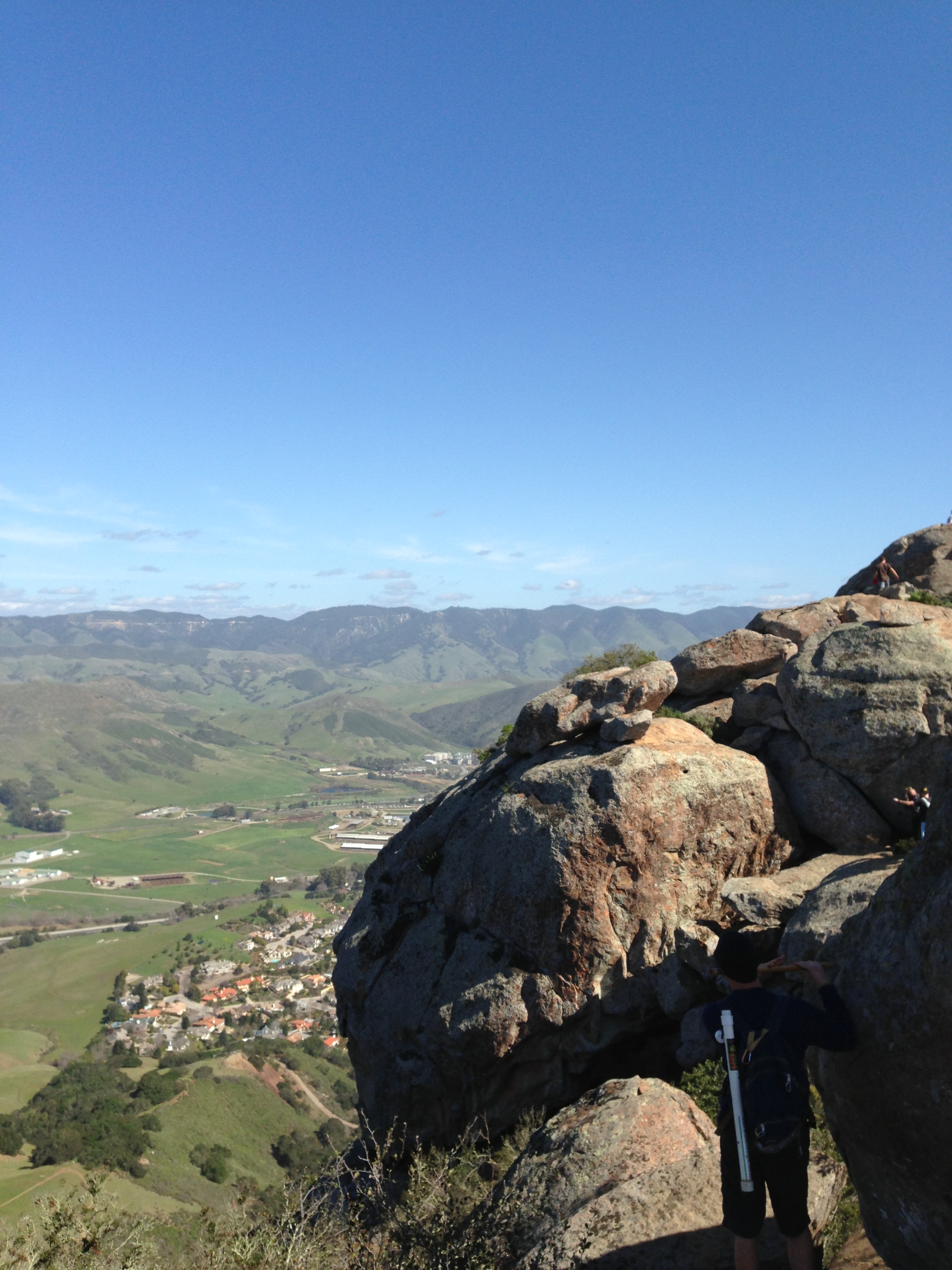
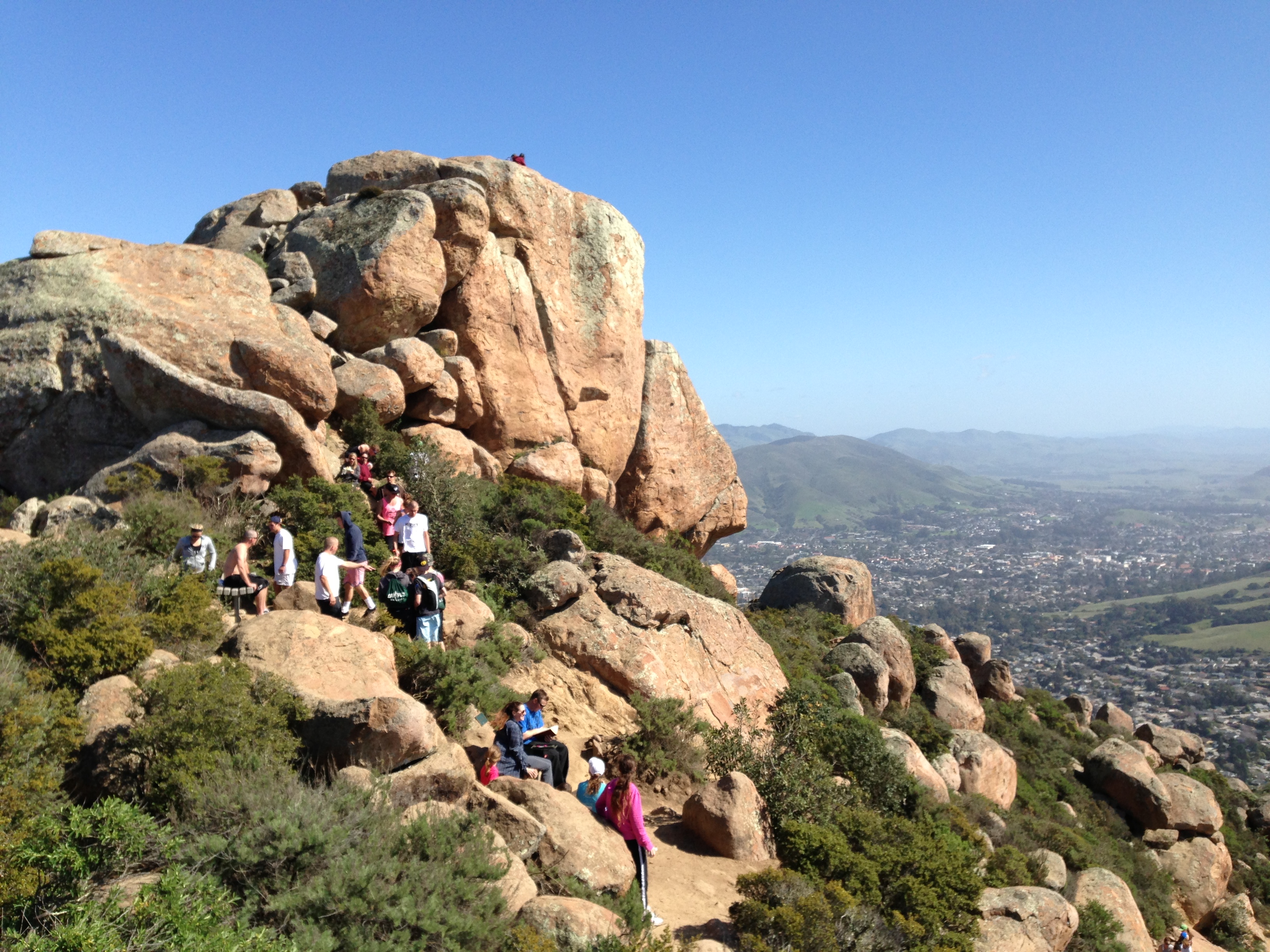
All this to say, Megan and I turned our lazy Saturday into a volcano hiking, boulder hopping excursion. Finally, we marked a mountain off our list and hiked San Luis Obispo’s favorite volcano—Bishop’s Peak.

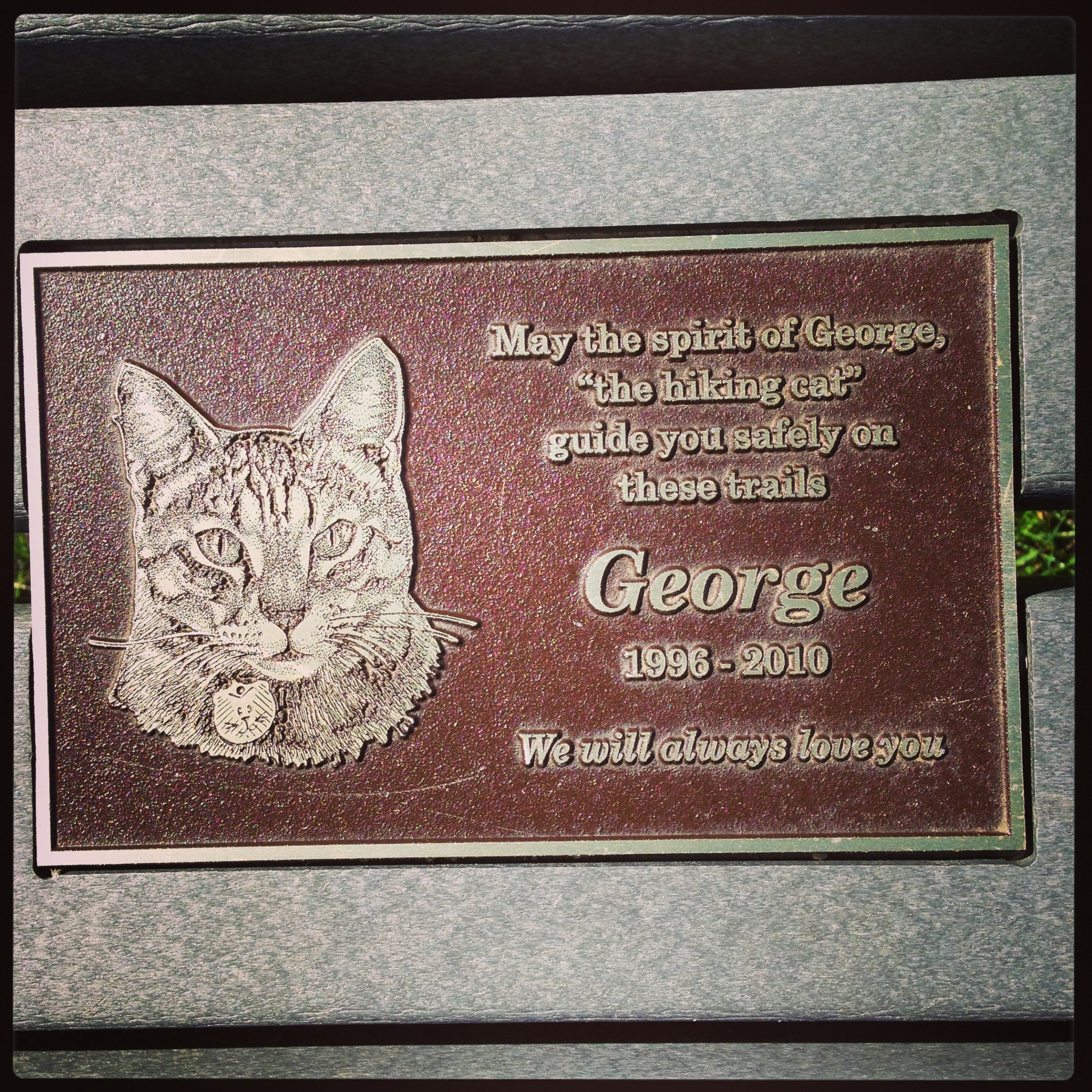
I won’t go into too much detail here. It’s a wonderful hike. The terrain changes every twenty minutes it seems. Take the trail and you’ll see: dry mountainous, shaded, mossy forest, New Mexico-esq boulders. There’s even a bench dedicated to “George: The Hiking Cat.”

To top it all off there’s a view of the ocean at the top. Not bad for a day almost spent in bed. As far as Sunday goes… I wont be moving my legs.

photo

George Cat

Bishops 1

photo

photo

Bishops 4

Why Did Jesus, Moses, the Buddah, and Mohammed Cross the Road? (Book Review)

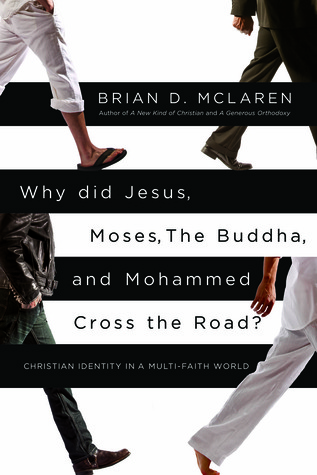
13529088Reading a Brian D. McLaren book is very similar to eating an entire lemon marring pie by yourself: it’s sweet at times, troubling at others, a lot to take in and hard to finish. With that being said, his latest venture into disrupting the Christian status-quo, Why Did Jesus, Moses, the Buddah, and Mohammed Cross the Road, is most likely the best book on theology I’ve ever read.

I’m not saying I agreed with every sentence—or even understood every sentence—but I think McLaren appropriately tackles a giant issue usually ignored and commonly mishandled in the modern Church (that big C is on purpose).

So before I breakdown my review, I will just say: yes, go read this book. It will answer questions, ask even more questions, and cause you to examine, test, and filter your faith in ways you may never have wanted to—though desperately needed to.

Here’s the gist: 

-Friendships with personal agendas are not friendships. If we seek out people only to change them (or convert), then we are not loving missionaries but religious salesmen.

“Shouldn’t it be possible to have a strong Christian identity that is strongly benevolent toward people of other faiths, accepting them not in spite of the religion they love, but with the religion they love?”

-There are generally two views of a Christian multi-faith perspective (three if you include moderate in the middle): Weak/Benign or Strong/Hostile.

“Christians settle on the right side not because they want hostility but because they want a strong faith identity. Christians clutter on the left side not because they want weakness but because they don’t want hostility”

McLaren goes on to say that there could exist a new identity altogether, introducing the main theme of his book: a “Strong/Benevolent” identity.

-Instead of looking for ways to change other people in other religions, we should be healing the body of Christ first. If we are to look to other religions, it should be in ways of working together for the “common good.”

“…the choice to live not for our own selfish interests alone, and not for the groupish interests of our clan or caste or civilization alone, but for the common good, the good of all creation.”

The Good

McLaren doesn’t take the challenge lightly. All the research, arguments and counterarguments are incredibly arranged and well-written.

My favorite spot in the book was his reflection upon Christopher Columbus, Constantine, and the Crusades; how all these horrific figures and events changed the face of Christianity—from that of love to domination and oppression. In consequence, McLaren argues, other religions sprouted; not in opposition to Christ but to his followers and the bloodshed that followed them.

Another quick note was McLaren’s take on Christ himself. Though not demeaning his death and resurrection in any way, he states that if we frame our perspective differently, it will add more value to it.

Was Jesus’ death simply a substitution sacrifice for a bloodthirsty, limited god, or rather, the largest stance of peace on earth ever to be proclaimed, forever changing to fate of history and setting humanity free? (summarized from text).

The Bad

As I first mentioned, the book is a lot to take in. At times, it seems as if McLaren crammed as many cans of worms between the covers as he could find. Many topics are brought into the conversation only to be featured as a sentence, paragraph, footnote, or even chapter; though they add value, they are not fully explored. Some issues may have been better left out entirely instead of the surface depth exploration they were allotted. Some readers may enjoy that aspect, I found it distracting from the core theme.

Speaking of distraction, there are more footnotes than anyone reader could ever really do anything with. He puts them at the bottom of the page; since they are in view, I feel I must read them. By the time I finish with his branching thought, I forgot where I was earlier and get lost. So a little warning: stay away from the footnotes, or rather, at least pick and choose those that interest you.

They are books within books.

Overall

My perfect bible study would revolve around this text. Not because I agree with it all and only want to read what I want to read, but because I think it would be impossible to get enough people to agree on everything in it. And it would be a fun and rewarding challenge for those daring enough to take their faith outside the comfort zone.

And yes, we Christians need to change some things.

My final thought:

Don’t skip this book just because McLaren is labeled “emergent.” Mother Theresa is labeled “catholic,” though I’ve been hearing protestants quote her my whole life. Labels are just a way to keep people from learning from each other and from loving each other.

We’re all just men and women anyways.

Now go buy the book!