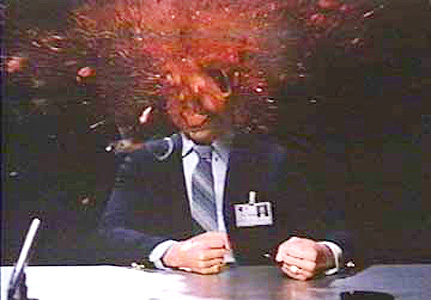
Friday morning I woke up with the worst of a weeklong cold. There was coughing, sneezing, and liquids draining in ways I never thought possible! Like an imprisoned Instagram filter, everything just seemed mucusy.
Remember that movie Scanners? You know, the one where that guy’s head explodes?
That was me. All I wanted was a blanket to hide in and fifteen more hours of sleep. Thankfully, I had to take a five-hour road trip to Seattle. (That was sarcasm). In effort to find any way out I could, I pleaded a case to my wife Megan:
“If my head is going to explode, it will be in the car.” She hates gore. “You will have brains all over you!” I exclaimed.
“Suck it up,” she said, “you’re going.” I sneered and coughed louder.
We planned to travel so I could interview for the University of Rochester. These interviews solidify entrance and also help acquire scholarships—my primary concern. Rochester offers Skype interviews if the off-site interview is too far away. An all too alluring temptation, but the in-person experience can never be replaced.
Truthfully, I was ready to give up. I didn’t care if I interviewed or attended another course ever again. Everything flew out the window. I wanted my bed. I wanted Netflix. And I didn’t want my head to explode.
Obstacles.
Obstacles orbit life’s milestones like the rings of Saturn. From a distance, they appear solid, intimidating, and flashy. Most will turn back; others will just get stuck gazing at the rings. (I’m not even sure what Saturn (the planet) looks like. I only know it has rings!)
But what happens when we stick with our gumption, stay focused, and approach the goal? We find the rings aren’t solid at all. In fact, they’re made of dust. Obstacles are like this. They test our endurance and our commitment. Sometimes we get scared and turn away; sometimes we push forward with less motivation than we assumed we’d need.
In the heat of the moment, I would’ve given in. I would’ve “given up the diet while reading the dessert menu” as author Peter Bregman says. Thankfully, my wife saw through Saturn’s rings and recognized the planet.
So we went. My head didn’t explode. In fact, Saturday morning, I woke up refreshed and ready. The interview went amazing and I even got to see a couple old friends. Thanks to Megan for pushing me. I guess it also helps to have someone keep you accountable.
Now watch that Youtube clip again, you know you want to.
 The Number Kevin