Think about this: You live in a small town; you’ve been there your whole life. One day, it just disappears, vanishes (maybe “Vanish” is too much; how about this: “It drowns”). The city drowns.
The waters rise. All you can do is head uphill.
WASHington
Last weekend, I was asked to lead worship in Entiat, Washington by my friend Gar Mickelson who was guest speaking. The church’s usual “worship-person” was on a retreat. I’m not sure who he was retreating from; they didn’t tell me.
Gar gave me advice to keep it simple: “It’s a small church in a small town.”
On the three-hour drive to Entiat, Gar spoke to us—us includes my wife; Josh Hardy, the guitar and piano accompaniment; and myself—about some of the history of Entiat, WA, a tiny town along the Columbian River near Wenatchee. “In 1960, most of the town had to move and relocate to higher ground, due to the Rocky Reach Dam, built just a few miles north on the river. This dam would be so powerful and so important, it would provide power all the way to Coeur D’Alene and beyond.”
The dam fulfilled its purpose and benefited many towns, unfortunately, at the cost of Entiat. The waters rose and she was of covered. The locals who stayed moved up hill and resettled.
The Number Entiat
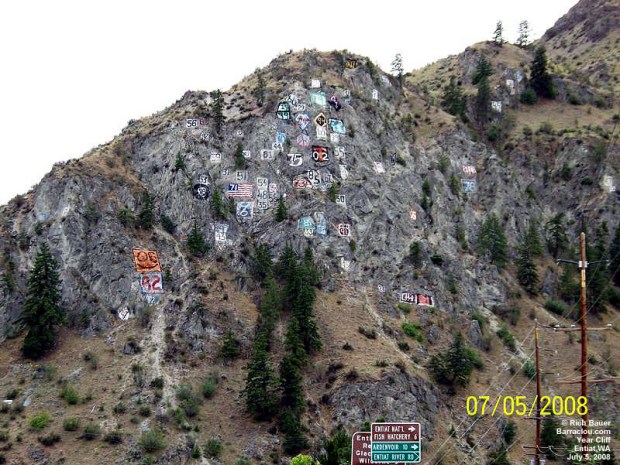
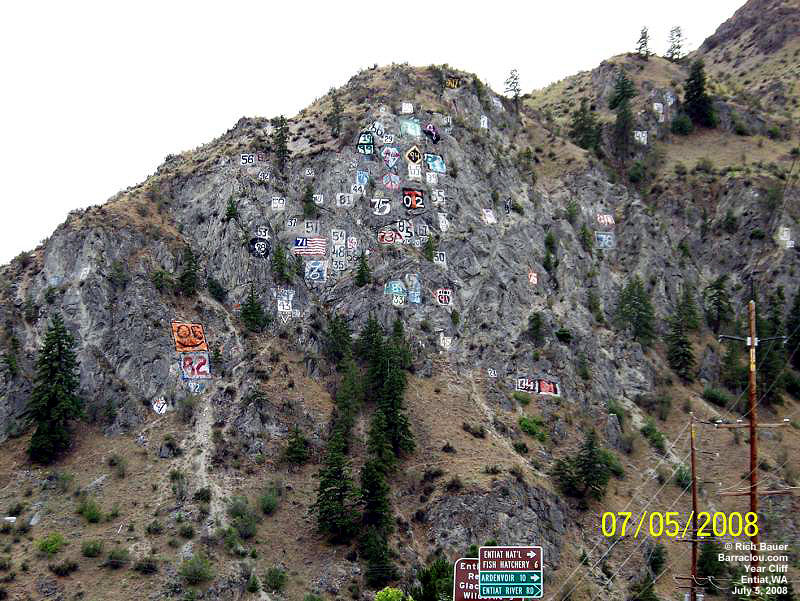
Pulling into the church parking lot, we noticed a steep and flat cliff on the side of a big hill which overlooked the town. “Numero Hill,” said a local.
On the cliff, Numero Hill displayed different sets of numbers, painted on the rock with alternating colors, textures, and fonts. It was Entiat’s refrigerator door; her children’s drawings of numbers, starting at 21 and ending at 2010. They were class years.
More from the locals:
Every year, a group of rebellious and brave teenagers tie a ladder to a rope—at the top of the hill—and lower the ladder down with someone hanging from it (this all usually happens in the middle of the night). The end result, of course, is a new class year marked forever into history on the side of Numero Hill.
Apparently this tradition started as a competition between the seniors and juniors at Entiat High School. The seniors would climb up and paint their numbers then the juniors would have one or two nights to black it out; all of this had to be done by graduation night.
How insane is that?
After church, we were offered a delicious meal as a thank you to our service. When I asked about Numero HIll, the “Old-timers” really lit up. Stories graciously flowed with smiles and frowns, some stories echoing each other, some contradicting.
I asked about the police; did they care about it? It all seemed dangerous to me. One very nice older gentleman, I think his name was Don, responded “Son, this is tradition.”
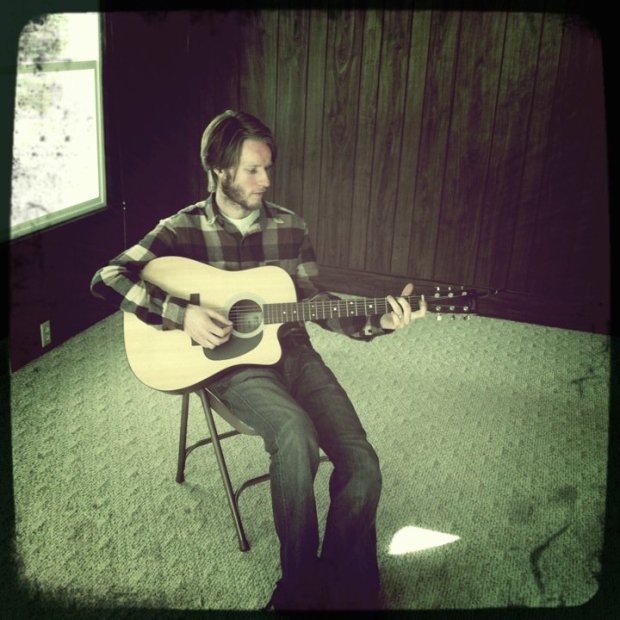
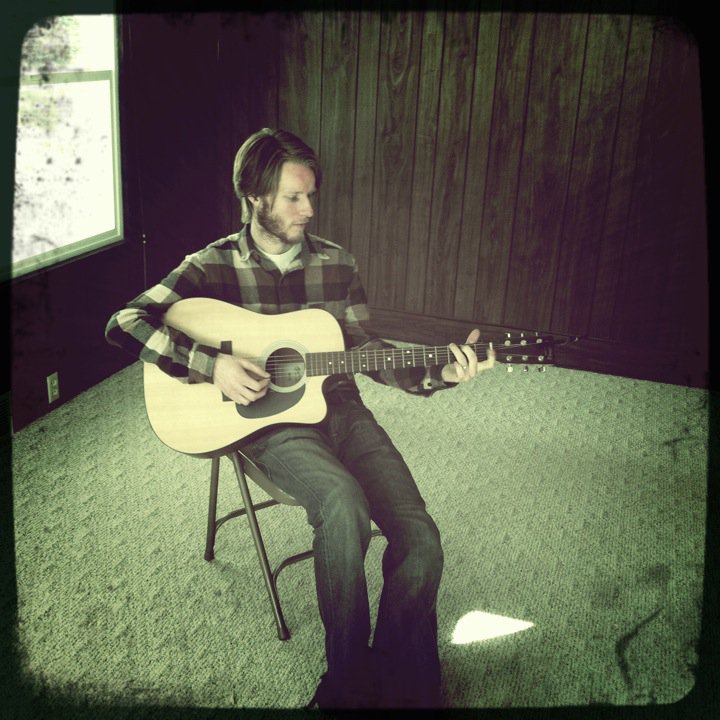
Preparing for the worship set. Photo by Josh Hardy.
Life in, Life Out
Where else in the world would something like this happen? Teenagers risking their lives to paint their school year on to the side of a mountain, no body caring to stop them? Police? Parents? Schools?
It’s as if Entiat is stuck in the 1950s.
Don, a local, told me about a person who once wrote an opinion piece to the newspaper about the dangerousness of kids climbing the mountain in the middle of night. “He also talked about the environment,” added Don.
“Did anything come of it,” I asked.
“He was straightened out.” Later, I realized Don was around when the town relocated to higher level.
In the car ride home, Gar asked us if we could imagine what it would be like to watch our whole town be washed away. Personally, I couldn’t. All I could think about were mewithoutYou lyrics from “The Dryness and the Rain.”
One day the water’s gonna wash it away
One day the water’s gonna wash it away
One day the water’s gonna wash it away
And on that day, nothing clever to say
The tradition of Numero Hill was around a few decades before the waters rose and covered old-Entiat. It causes me to speculate about the turning point of the importance for Numero. After the town was covered, what was left? Numero Hill. Overnight, it changed from a mountain to a monument; it was the last bit of heritage they had.
I like to think these old-timers look up to Numero Hill and are reminded about the town that used to be. They see reckless children climbing and defacing a beautiful mountain in the middle of the night, retreating back home alongside the Columbia River.
After the waters rose, the community was fine; everyone got new homes out of the deal, so that’s good. Really, I’m sure the town benefited more than I’m letting on. It just makes you wonder, doesn’t it? What does it feel like to see your childhood home disappear—for the benefit of others—under rising, raging waters.
I think I’ll go deface something.
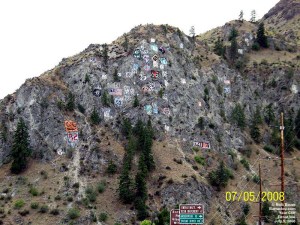
The best picture on the internet I could find.
47.677683
-116.780466

 The Number Kevin